Internal mobility at Cambridge Intelligence
Career development isn’t always a straight line.
At Cambridge Intelligence we encourage career development to take on many forms. People have developed their careers by moving into completely new disciplines, stepping into newly created positions, and by taking on secondments that build experience beyond usual roles.
These moves look different for everyone, but they each show how internal mobility can help people explore their interests and broaden their skills to find the right direction for their career.
Ellie: Taking the leap into marketing

Ellie joined Cambridge Intelligence as Office and Facilities Manager in late 2024. Less than 18 months later, she moved into a new discipline, becoming Marketing Coordinator in 2026.
In her previous role, Ellie focused on keeping the workplace running smoothly. Her responsibilities ranged from health and safety checks and maintenance to supporting employee wellbeing and helping create a positive office atmosphere. Although she initially wasn’t sure how easily she would connect with her new colleagues, she was pleasantly surprised by the warm welcome and company culture.
The possibility of a different career path emerged soon after she joined, when she got to know the Marketing team. Ellie had previously worked at a marketing agency and remained interested in the field. When the Marketing Coordinator role opened, her manager, colleagues and the People team, and members of the Marketing team encouraged her to apply.
After securing the role through a three-stage interview process, Ellie refreshed her existing knowledge and began preparing for the practical side of the job, including learning basic HTML and exploring the tools used by the team.
Moving into a new discipline has meant learning more than she initially expected. Rather than focusing on one area of marketing, she is building experience across several, from supporting the website build to becoming involved in content and social media.
Ellie notes the encouragement she received before, during, and after the move.
“The only person who had doubts about me was me.” – Ellie, Marketing Coordinator
For Ellie, being proactive, open-minded and willing to learn has been essential. Her advice to anyone considering a similar move is simple: “Go for it. Follow something you’re passionate about and trust yourself, even if it feels challenging at the start.”
Luke: Finding the right path into technical leadership

Luke joined Cambridge Intelligence as a Software Developer in 2023. He became Principal Team Lead in 2024 before moving into the newly created position of Lead Architect in 2025.
A strong advocate for JavaScript and browser-based development, Luke was attracted to Cambridge Intelligence by “the opportunity to push the limits of what can be done in the browser.”
His early experience at the company contrasted with his previous freelance work, particularly in the amount of structure, collaboration and feedback involved. He came to see that environment as a positive and valuable part of the culture, and one that would help him develop beyond his individual technical work.
His route into leadership was not completely straightforward. Luke initially applied for the CTO position but was unsuccessful. When the Lead Architect role was later introduced, however, it appeared to offer a better fit. It allowed him to remain close to the technical work he enjoyed while playing a larger part in strategic decisions across the Development team. He applied and ultimately secured the position.
Preparing for the move involved more than deepening his technical knowledge. Luke focused on developing his leadership skills, reading about technical leadership, and learning more about team organization and working processes.
The new role has brought different challenges, particularly defining a technical roadmap and balancing longer-term planning with his background in agile development. Day to day, his work now combines technical planning, collaboration, communication, and some coding. A significant part of the role involves explaining complex technical ideas to different stakeholders in ways that are meaningful to them.
What he values the most is the opportunity to contribute to the bigger picture while maintaining a balance between technical and people-focused work. Although the position initially felt daunting, he was surprised by how quickly it began to feel manageable.
Luke believes technical skills matter, but adaptability and an understanding of people are just as important when moving into leadership.
His advice is:
“Go for it. Stepping into something new can be challenging, but also highly rewarding, and often less scary than it first appears.” – Luke, Lead Architect
Amy and Julia: How one secondment created another opportunity
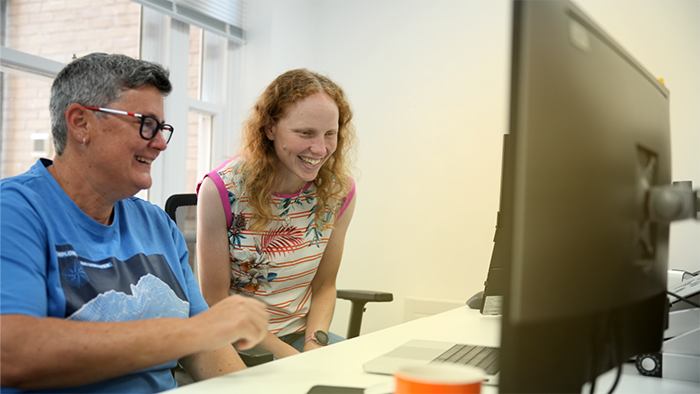
Internal mobility doesn’t always begin with a permanent vacancy. Sometimes a temporary move creates an opportunity for someone else to gain experience too.
That is what happened when Amy stepped away from her position as Development Manager to cover the Chief of Staff role on an interim basis, creating an opening for Julia to take on Amy’s responsibilities.
Amy: Gaining a wider view of the business
Amy joined Cambridge Intelligence as a Development Manager in 2020. Coming from a database background, she saw the company as an opportunity to deepen her understanding of software development.
In 2026, she began a secondment as interim Chief of Staff, providing maternity cover for the existing role.
As a Development Manager, Amy’s days centered on supporting her team and ensuring delivery priorities remained on track. When she learned about the upcoming Chief of Staff vacancy, she saw it as a chance to experience a very different part of the business and eventually bring that knowledge back to her team.
To prepare, Amy spoke with the CEO and Head of Development, learned more about the role from the existing Chief of Staff, and researched what the position typically involved. The recruitment process also included a market research project.
There were moments when Amy questioned whether she was right for the role. When she shared those doubts with the Head of Development, he encouraged her to continue, while the Chief of Staff offered reassurance throughout the process. That support helped her build confidence and made the transition a positive experience.
Her work is now highly varied, ranging from supporting the CEO and organizing company meetings to coordinating team off-sites and helping senior leadership meetings run smoothly.
“I particularly enjoy the organizational side of the role and the opportunity to gain insight into parts of the business I would not normally be involved in, such as the commercial side,” she says.
“I think that wider perspective will be valuable when I return to my role, helping me better understand how decisions are made and how different areas of the business work together.” – Amy, Interim Chief of Staff
One of the biggest adjustments has been moving away from working closely with the same team each day. Although she is now connected to more areas of the company, the position involves more individual work and less of the collective team dynamic she previously enjoyed.
For Amy, mindset matters more than arriving with every necessary skill. Skills can be learned, she believes, while adaptability, openness to new experiences, and the ability to work with different people are what make transitions successful.
Her advice to others is to start by having conversations and exploring what may be possible.
“Have a go, you’ve got nothing to lose,” she says. “Even if you don’t get the role, it shows initiative.”
Julia: Trying management without leaving technical leadership behind
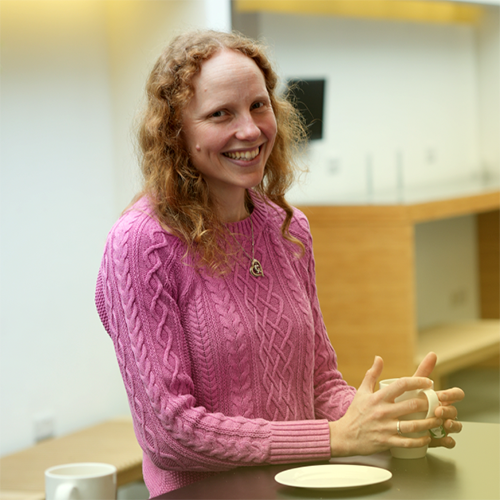
Amy’s move created a second opportunity within the Development team.
Julia joined Cambridge Intelligence as a Software Developer in 2017, attracted by the company’s connection to graph theory and its relationship to her studies. She became a Principle Team Lead in 2024, balancing coding and project coordination with supporting colleagues across multiple projects.
When Amy, who is normally Julia’s manager, suggested that she step into the Development Manager role temporarily, Julia saw it as an opportunity to broaden her skill set and experience a different type of leadership.
She prepared by speaking with other Development Managers, receiving a detailed handover from Amy, and researching more about management. The support from Amy, alongside encouragement from colleagues, was particularly valuable during the transition.
Acting as Development Manager has shifted Julia’s focus toward coordination, team support, and closer collaboration with product teams and other managers. What she enjoys the most is helping the wider team succeed.
The secondment has also required her to rethink some of her working relationships. She has had to adjust to managing people she previously worked alongside and collaborate more closely with colleagues she had not worked with before. In the process, she has learned more about how different people communicate, approach problems, and prefer to work.
Julia sees the experience as a way to expand her capabilities without permanently leaving her technical role behind. When the secondment ends, she will return to her previous position with a broader understanding of management and team dynamics.
“Internal moves can be a great way to broaden your skill set. Growth doesn’t always require a formal role change”. – Julia, Interim Development Manager
“I really value the flexibility at Cambridge Intelligence to shape responsibilities around individual strengths and interests,” she says.
Career development can take more than one direction
Together, these experiences show that development doesn’t always come from waiting for the “right” role to appear. It can begin with a conversation, an unsuccessful application, an interest beyond someone’s existing responsibilities, or a temporary opportunity that was never part of the original plan. Sometimes the most valuable next step is simply the opportunity to try something new.
Want to join Cambridge Intelligence?